












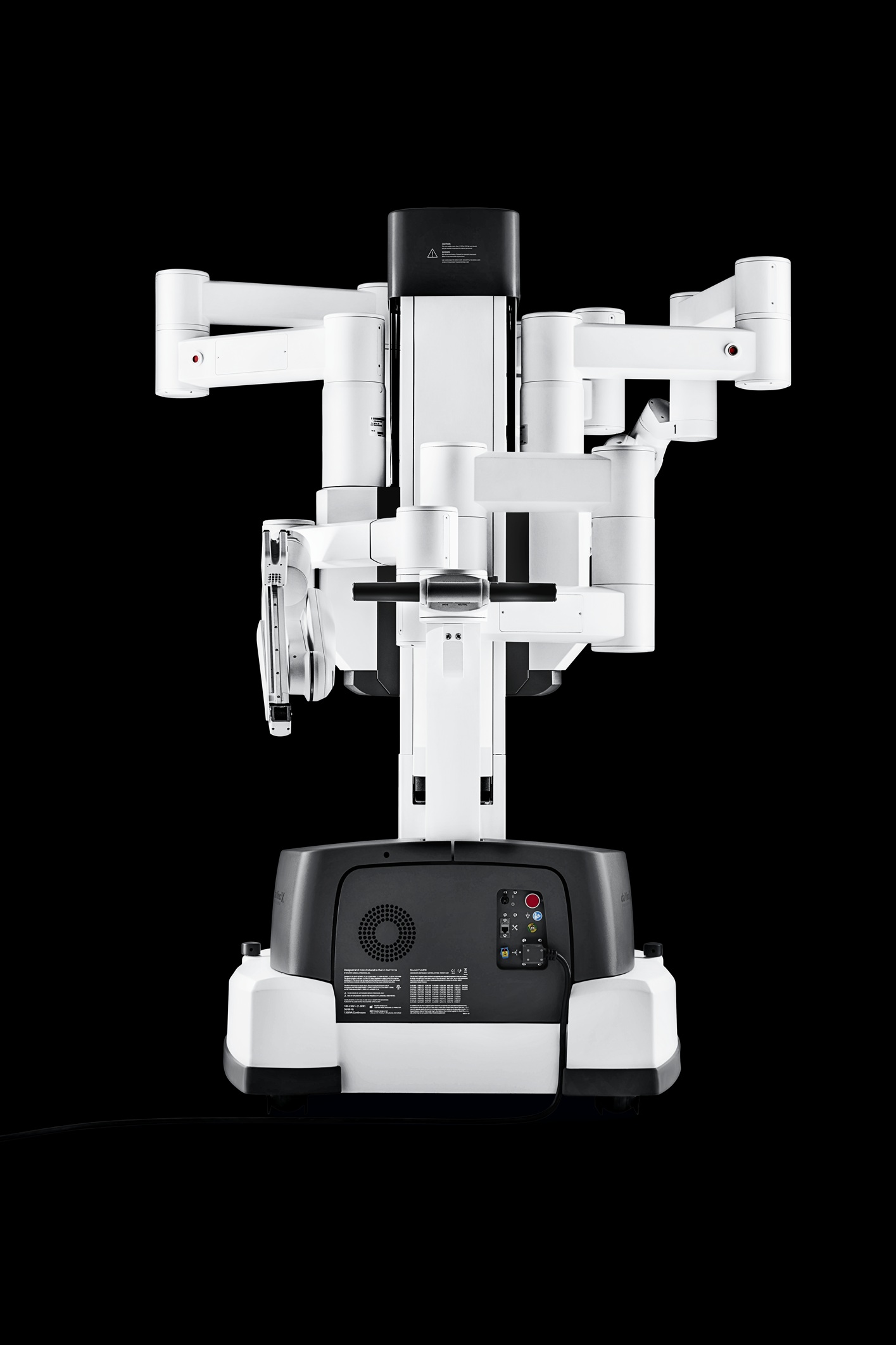
Da Vinci X is one of the most advanced robotic platforms for minimally invasive surgery. By transferring the surgeon's hand movements to the robotic arms with millimeter precision, it enables safer and more effective operations with significantly smaller incisions compared to open surgery.
How it Works?
The surgeon performs the surgery, not the robot. From a console in the operating room, the surgeon controls a 3D, high-resolution, fluorescent-imaging camera. The robotic arms follow the surgeon's movements precisely, filtering out tremors and performing maneuvers in confined spaces that the human hand cannot, thanks to their 540° rotatable wrist movements. Usually, 3-4 incisions smaller than 8 mm are sufficient.
What are the Advantages?
For the patient:
- Less blood loss and pain
- Shorter hospital stay
- Faster return to normal life
- Lower risk of complications and infection
- Very small scar
For the surgeon:
- Reduced fatigue and pain during long surgeries thanks to working while seated
- More precise intervention thanks to 3D-HD imaging and depth perception
- Superior maneuverability in confined spaces
Where is it used?
- Gynecology (uterine cancer surgeries)
- Urology (prostate cancer, kidney cancer – radical and partial nephrectomy)
- Thoracic surgery (lung lobectomy, segment resection)
- General surgery, ENT and pediatric surgery
Frequently Asked Questions
1. What is robotic surgery? Does the robot perform the surgery?
No, the surgeon performs the surgery, not the robot. The da Vinci X Robotic Surgical System is a highly advanced tool that transmits the surgeon's hand movements to the patient with millimeter precision. The surgeon controls the robot while sitting at a special console in the operating room. The system precisely tracks the surgeon's movements, eliminates tremor (tremor filtration), and offers a much more controlled surgical procedure.
2. How is surgery performed with da Vinci X?
Thirty-four incisions, usually smaller than 8 mm, are made in the patient's body. Robotic arms and a 3D, high-resolution, fluorescent imaging camera are inserted through these incisions. The surgeon controls the robot from a console. The image is transmitted to the surgeon in true 3D-HD, magnified up to 16 times. The same image is also shown to the surgical team in 2D on a monitor.
3. Why choose da Vinci X? What are its main advantages?
Advantages for the surgeon:
540° rotatable wrist instruments → Maneuvers that the human hand cannot perform are possible in confined spaces.
3D-HD image + 16x magnification → Depth perception is increased, tissues are seen very clearly. Working while seated → Back, neck, and hand fatigue and pain are significantly reduced during long surgeries. Tremor filtering → Even the slightest hand tremor is eliminated.
Advantages for the patient
- Less blood loss
- Less pain
- Shorter hospital stay
- Faster return to normal life
- Lower risk of complications
- Lower risk of infection
- Much smaller scar (cosmetic advantage)
- High success rate, even in obese patients
4. In which diseases and procedures is da Vinci X frequently used?
Gynecology → Uterine cancer (hysterectomy ± lymph node dissection)
Urology
Prostate cancer (radical prostatectomy)
Kidney cancer (radical/partial nephrectomy)
Thoracic Surgery → Lung lobectomy, segment resection, lymph node sampling
It is also used in General Surgery, ENT, Cardiovascular and Pediatric surgery.
5. What is the difference of da Vinci in prostate cancer surgery?
The male pelvis is a very narrow area. Thanks to da Vinci's 540° rotatable instruments, the nerves can be protected much better. This significantly reduces the risks of postoperative complications such as
urinary incontinence
and loss of sexual function.
6. What are the advantages in uterine cancer surgery?
The uterus is removed vaginally, and the vagina is sutured.
Lymph nodes can be identified and collected much more clearly thanks to fluorescent imaging.
If necessary, the ovaries and the upper part of the vagina can also be removed.
7. Does it make a difference in kidney cancer (partial/total nephrectomy)?
Yes. Especially in partial nephrectomy (removal of only the tumorous part of the kidney):
The tumor boundary is clearly seen with the fluorescent camera. The blood vessels going to the kidney are closed for a short time (partial ischemia) and the tumor is safely removed.
Less healthy kidney tissue is lost.
8. What are the advantages in thoracic surgery (lung surgeries)?
Three to four 8 mm incisions between the ribs are sufficient.
Smart stapler (automatically performs appropriate stapling by measuring 1000+ tissues per second).
Tumor segment and lymph nodes are clearly marked with fluorescent imaging.
The risk of air leakage is significantly reduced.
9. What makes da Vinci X different from other systems?
- Thinner and smaller arm design
- Wider working area (wider reach)
- Ease of linear port placement
- Faster setup with visual guidance
- Designed as a cost-effective fourth-generation platform.
Da Vinci X is a reliable technology that offers both comfort and precision to the surgeon and faster recovery and less risk to the patient. With small incisions, high image quality and advanced instrument mobility, it is an indispensable option for modern surgery.
