













 Listen to this article
 Herniated Cervical Disc
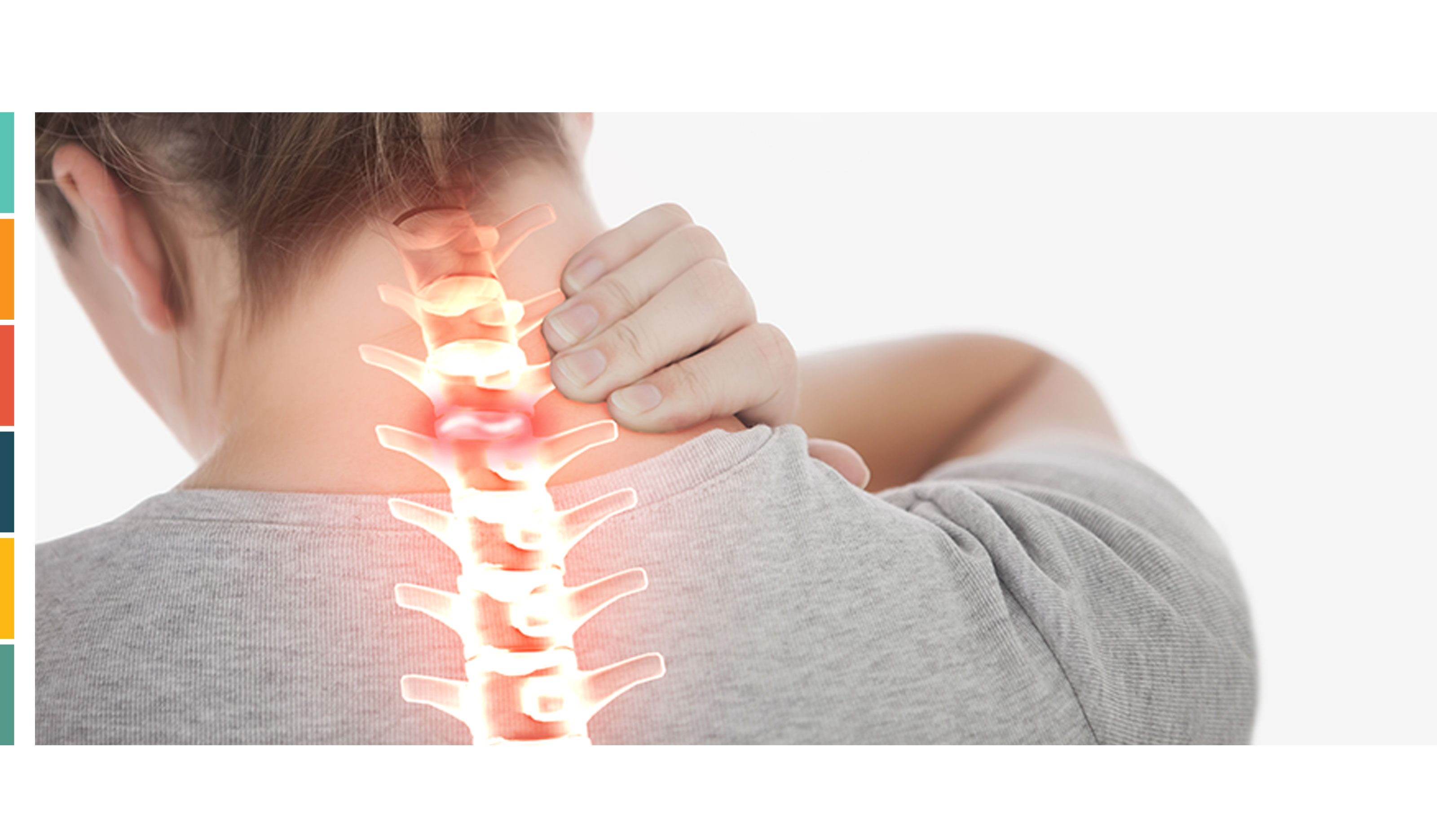
Herniated cervical disc is among most common reasons of cervicalgia (pain in the neck). There are seven vertebras in cervical spine. The spine is formed by 33 vertebrae. It keeps the body erect and it is responsible for protecting the spinal cord.
Vertebras that form the vertebral column are connected to each other with two joints. These include one soft disc and two superficial joints, called facet. The disc consists of viscous fluid that acts like an absorber for the pressure applied on the spinal column and external solid connective tissue.
Fluid loss (dehydration) occurs in viscous fluid the disc due to trauma or aging and thus, the disc cannot absorb the pressure properly. When it is combined with deterioration in external part of the disc, the viscous fluid bulges toward the spinal canal. This condition leads to herniation of the cervical disc. The bulging compresses the nerves that innervate arms and upper trunk, resulting with various complaints.
What are causes of herniated cervical disc?
Herniated cervical disc develops in people, who are physically active and are usually 20 to 40 years old. It is difficult to determine the cause exactly. A part of patients resumes their lives without recognizing the herniation. Intervetrebral discs can herniated spontaneously without any trauma, but there are many other risk factors, such as traffic accidents, fall, lifting heavy objects, sprain, working with computer for prolonged time and anterior flexion of head to use cell phone. Although a clear hereditary pattern has not been demonstrated, it is more common in people with a family member, who has this condition.
What are symptoms of herniated cervical disc?
Cervicalgia (pain in the neck) is the major symptom of herniated cervical disc. However, not all neck pains are caused by herniation. A major part of them originates from muscles. Herniation-related pains radiate to back, scapula, shoulder, posterior part of head, temples, arms and fngers.
- Reduction in hand skills,
- Numbness and tingling in arms and fingers,
- Limping and abnormal gait posture,
- Sensorial deficit,
- Hypoactive reflexes
- Loss of balance and coordination,
- Thinning of arms.
Diagnosis
Herniated cervical disc is diagnosed by determining type and location of pain in physical examination made by a doctor.
Certain details, such as onset time and character of pain and the body parts the pain is felt, facilitate the diagnosis. Motor and sensorial deficits as well as reflex abnormalities are checked.
However, imaging tests are required to determine location of the compression accurately and make differential diagnosis of other conditions that can lead to pain.
X-ray, myelography, EMG, computerized tomography (CT) and magnetic resonance imaging (MRI) are used for final diagnosis. X-ray offers details only about bone structure of vertebral column, while CT visualizes the pathologies in spinal cord and bones. MRI can detect even the minor details of vertebral column, spinal cord, structure of disc and nervous deformations caused by the compression. EMG is a test that measures electrical activities of muscles and it is used to see if nerves are damaged.

Treatment
Herniated cervical disc can be improved usually without any requirement of surgical treatment. In treatment of herniation, the patient is recommended to rest. Resting and avoidance from exercise for a while will accelerate the healing process. However, resting should be limited to several days, as long-term inactivity can be inappropriate.
Medication treatment
Medications include analgesic agents that are pain killers. Sometimes, it may be necessary to add muscle relaxants to prescriptions. In case of severe pain that does not regress, short-acting narcotic analgesic agents and corticosteroids can be tried.
Recently, gabapentinoids are often preferred due to their effects on central pain center. However, if not used under supervision of a doctor, long-term use of these medications is associated with many side effects.
Surgical Treatment
This treatment can be required for pain that is refractory to medical treatment and patients, who have significant loss of muscle strength or spinal cord compression. Surgery aims to remove the part of intervertebral disk that compresses spinal cord and nerve. In the surgery, a small incision is made at anterior or posterior part of the neck. Surgery technique depends on location of hernia, surgical factors and preference of doctor.
As is the case with all surgical procedures, this surgery also has risk of complications. These risks include postoperative bleeding, injury of spinal cord or nerve or infection. Hernia can recur due to family history, overall health and postoperative lifestyle of patient. Patients can be discharged within 24 hours after surgery and they can resume activities of daily life in a stepwise manner.
Although spinal fusion is used to correct this condition, it is not often preferred, as it decreases movements of the neck. Today, this method is replaced by prostheses that allow postoperative movement at surgical site.

Other treatment methods
Physiotherapy is a part of treatment in herniated cervical disk. This treatment offers various options, including but not limited to stretching exercises, massage, ultrasound, manual therapy and electrical muscle stimulation.
Epidural injections are reserved for intense pain. Corticosteroid agent or local anesthetic agent is injected around meninges or periphery of nerve roots. Injection aims to alleviate edema and inflammation.

 20/07/2026

